H.R. 7389: Why Independent Auto Glass Shops Need to Pay Attention
The Motor Vehicle Modernization Act of 2026 is moving through Congress, and it reaches directly into issues that will shape the future of independent automotive glass repair: right to repair, ADAS calibration, repair information, software access, vehicle-generated data and consumer choice.
IGA supports the bill's right-to-repair direction, but believes Congress must make certain that independent repairers have the practical ability to safely complete modern glass replacement and associated calibration work.
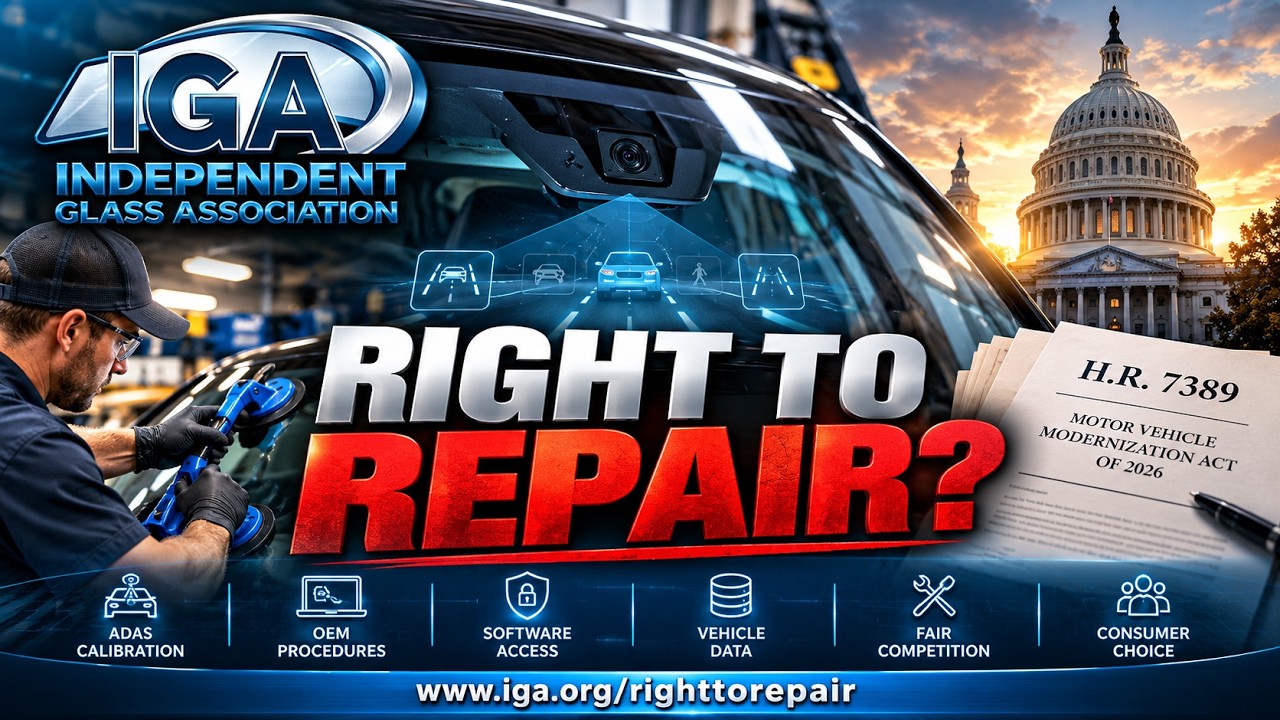
What Is H.R. 7389?
H.R. 7389, the Motor Vehicle Modernization Act of 2026, is federal motor-vehicle legislation introduced by House Energy and Commerce Committee Chairman Brett Guthrie. The bill addresses a broad range of vehicle safety and modernization issues.
Of particular importance to independent repairers, the amended legislation incorporates right-to-repair provisions and recognizes calibration and recalibration as part of covered motor-vehicle repair activity.
A right to repair must include the right to safely complete the repair.
Consumer choice means little if an independent shop is legally permitted to perform a repair but cannot reasonably obtain the procedures, calibration information, software, authentication or vehicle data necessary to return the vehicle to proper operating condition.
Why This Matters to Auto Glass
The modern windshield is increasingly part of the vehicle's safety and technology platform. A windshield replacement may involve forward-facing cameras, Advanced Driver Assistance Systems (ADAS), rain and light sensors, head-up displays and other electronic systems.
For many vehicles, replacing the glass is only part of the job. The shop may also need vehicle-specific procedures, calibration specifications, diagnostic information, software access and the ability to verify that affected systems are functioning correctly.
- ADAS calibration is explicitly relevant. Congress is considering calibration and recalibration within the federal right-to-repair framework. That makes this an auto glass issue, not merely a mechanical-repair issue.
- Software is becoming part of the repair. Secure gateways, proprietary authentication, programming and electronic service functions can determine whether an independent shop can actually complete the work.
- Vehicle data matters. As vehicles become more connected, access to information generated by the vehicle may become necessary to diagnose, calibrate or verify a repair.
- Consumer choice is at stake. A customer's right to choose an independent glass shop is weakened if technology effectively forces the repair into an OEM-controlled or authorized channel.
- The rules written now can shape the market for years. Federal policy developed around today's vehicles will influence how independent shops compete as ADAS and connected-vehicle technology continues to expand.
The question is no longer simply whether an independent shop is allowed to replace the windshield. The question is whether that shop will have the access necessary to safely finish the entire repair.
Where the Bill Stands
On May 21, 2026, the House Committee on Energy and Commerce reported H.R. 7389, as amended, to the full House by a 48-1 vote. That means the legislation has moved beyond the committee stage and independent shops should be paying attention now, while the legislative process is still underway.
IGA's Position
IGA supports meaningful, enforceable federal right-to-repair protections and welcomes the recognition that calibration and recalibration are part of modern motor-vehicle repair. However, the Association believes the final legislation must address the realities of today's connected, software-dependent and ADAS-equipped vehicles.
IGA is asking Congress to preserve the bill's recognition of calibration and recalibration while strengthening protections that give independent repair facilities reasonable and secure access to the technology necessary to perform lawful repairs.
- Preserve calibration and recalibration protections. These activities must remain clearly recognized as part of covered repair.
- Protect access to OEM repair information. Independent shops need the procedures, specifications and technical information required to perform and verify safe repairs.
- Address software and authentication access. Security measures should protect vehicles without becoming unnecessary barriers to legitimate independent repair.
- Address necessary vehicle-generated data. When data is reasonably required to diagnose, calibrate or verify a covered repair, the consumer's chosen repairer needs a reasonable and secure means of accessing it.
- Prevent technological gatekeeping. Software locks, artificial delays or proprietary systems should not be used to unnecessarily steer repair capability toward an OEM-controlled network.
- Give independent auto glass a seat at the table. IGA is asking that independent automotive glass businesses be represented in relevant NHTSA and FTC studies, consultations, rulemaking and stakeholder proceedings.
"If a consumer has the right to choose an independent auto glass shop, that shop must have a reasonable path to the information and technology necessary to safely complete the repair."
Independent Glass Association - H.R. 7389 Policy PositionWhat Independent Shops Should Do Now
Shop owners do not need to become lobbyists to make a difference. What lawmakers need most is a clear explanation of how federal policy affects real repairs, real customers and real independent businesses.
- Read IGA's position. Review the public statement and congressional letter so you understand the specific issues IGA is raising on behalf of independent automotive glass businesses.
- Contact your U.S. Representative. Tell the office you operate an independent automotive glass business and that H.R. 7389 affects your ability to service modern ADAS-equipped vehicles.
- Use real examples. Explain situations where OEM procedures, software, secure gateways, calibration requirements, authorization systems or vehicle data have affected your ability, time or cost to complete a repair.
- Ask for consumer choice to be protected. Tell lawmakers that a consumer's right to choose an independent repairer must include practical access to the technology necessary to safely complete the repair.
- Send examples to IGA. Real shop experiences can help IGA demonstrate to policymakers how these issues affect independent businesses in practice.
- Stay engaged. The language can change as legislation advances. Watch IGA advocacy updates and be prepared to respond when targeted shop participation can have the greatest impact.
Do not assume this is someone else's right-to-repair fight. If your shop replaces windshields on ADAS-equipped vehicles, the policy questions in H.R. 7389 can directly affect how you perform, calibrate and verify those repairs in the future.
What to Tell Congress
Keep the message simple: support consumer choice, preserve calibration and recalibration as protected repair activities, and ensure independent repairers have reasonable and secure access to the information, software, authentication, calibration specifications and necessary vehicle data required to safely complete a repair.
IGA Will Continue to Represent Independent Glass
The automotive glass industry's interests cannot be treated as an afterthought in broader automotive repair policy. Windshield replacement now intersects directly with cameras, sensors, calibration and vehicle software. IGA intends to make sure lawmakers and federal agencies understand that reality.
IGA will continue monitoring H.R. 7389 and related federal right-to-repair activity and will advise shops when additional action is warranted.
Independent Shops Need a Voice in What Comes Next.
H.R. 7389 can help define federal repair policy for increasingly connected and ADAS-equipped vehicles. Independent automotive glass businesses should not wait until those rules are written to explain what they need to safely serve their customers.